
The HaBait Shel Bar Research Institute
The HaBait Shel Bar Research Institute was established in April 2024 out of a vision to advance women’s health and to significantly improve how women in Israel cope with gynecologic cancer. The Institute operates on the principle of evidence-based advocacy (evidence-based policy change), combining medicine, research into the experiences of women living with illness, and policy advancement.
In recent years, fundamental changes have taken place in the world of oncology: scientific progress, innovative treatments, and rising survival rates. More and more women are living alongside the disease, and even being cured of it. This reality calls for a new kind of research – one that focuses not only on the tumor but also on the woman: the process she goes through, the challenges she faces, and the rebuilding of her life.
As a leading association, we understood that we must initiate the missing studies rather than wait for them. We therefore established the Research Institute as an independent body whose purpose is to generate high-quality data on gynecologic cancer from the patients’ point of view – and to leverage it for systemic change, the advancement of evidence-based policy, and the empowerment of women.
Alongside qualitative and observational studies, the Institute is leading the creation of a unique database on gynecologic cancers and their treatments – with strict adherence to ethics and privacy and the use of advanced anonymization technologies. The database is an innovative infrastructure for medical research that can yield new insights, guide decision-making, and improve the quality of life of women in Israel and around the world.
The Research Institute works in collaboration with the best medical centers in Israel and the best clinicians in Israel and abroad. Already in its first months of operation, the Institute is leading groundbreaking studies, presenting data at international conferences, and serving as an inspiring model for similar organizations in Europe and other countries.
The Research Institute is managed on a volunteer basis by Dr. Zohar Magen, with Prof. Zvi Vaknin serving as its volunteer chair. The Institute has an extensive team with expertise, knowledge, and experience in the fields it studies.
For collaborations, you can email Dr. Zohar Magen: zohar@women-cancer.org
Research Institute Team

Prof. Zvi Vaknin, Chair of the Research Institute
Prof. Zvi Vaknin is Director of the Gynecologic Oncology Unit at Shamir Medical Center (Assaf Harofeh). Prof. Vaknin serves as Chair of the Tel Aviv District of the Israeli Society of Obstetrics and Gynecology, and has served as Chair of the Israeli Society of Gynecologic Oncology. He is an expert in treating cancerous and precancerous conditions using robotic, laparoscopic, and open approaches. He began his work in gynecologic oncology during a fellowship in Canada, at one of the world’s leading centers, and was among the pioneers of robotic surgery in Israel. Prof. Vaknin has accompanied the association for many years and serves as chair of its Research Institute (on a volunteer basis).

Dr. Leeat Anker Kitai, Clinical Information Director
Leeat was born and raised in Melbourne, Australia, and has lived in Israel for over 20 years. She devoted her first years in Israel to academic studies, including doctoral studies in medical sciences at Tel Aviv University. For over a decade Leeat has worked in a variety of roles in the pharmaceutical and medical device industries. In previous roles, Leeat was responsible for the women’s cancers area as a medical director at AstraZeneca, led a range of scientific initiatives including collaborations with physician associations and scientific conferences, served as a global regulatory expert at Novocure, and was responsible for clinical and commercial submissions worldwide for product development and registration. In her current role she is a medical director at Sanofi in the field of immunology.

Noa Dagan, Research Institute Team Lead
Noa holds a bachelor’s degree in psychology from the Open University and a master’s degree in social psychology from Ben-Gurion University of the Negev, and is currently a doctoral candidate in social psychology at Ben-Gurion University. Her research addresses decision-making and human behavior in health and environmental contexts. In her doctoral work she studies the factors that inhibit or prevent people from taking preventive action, such as screening tests for early detection. Noa heads the association’s research team and is engaged in planning and advancing studies in women’s health and gynecologic cancer, from formulating the research question through analyzing and communicating the findings.

Tasabeeh Ghazawi, Researcher at the Research Institute
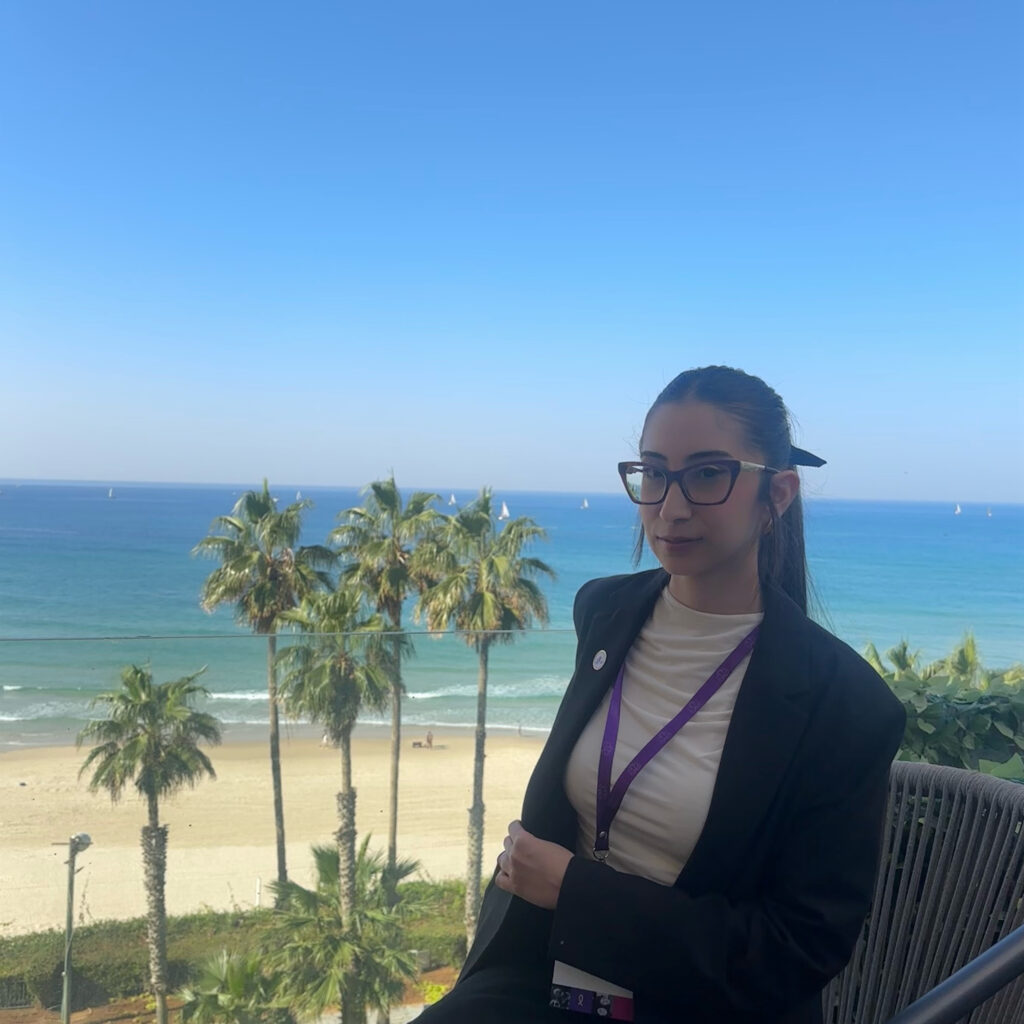
Rima Dalal, Researcher at the Research Institute
Rima holds a bachelor’s degree in life sciences from Tel Aviv University and is a master’s student in glycoimmunology at the Shmunis School of Biomedicine and Cancer Research at Tel Aviv University. In her research, Rima studies the structure of sugars on biologic drugs and their interaction with the immune system, including cancer therapies.
Rima believes in bridging adjacent worlds, and sees a close link between solid scientific research and successful clinical research – two worlds that complement each other. Alongside the scientific research, it is important to her to remember the people at its center: the patients. She therefore sees her work at the association as a meaningful connection between the world of science and the clinical and human world, and their combination as a way to advance research that has meaning and impact. At the association’s Research Institute, Rima develops, writes, and advances studies in women’s health and gynecologic cancer, out of a desire to connect scientific knowledge with real needs on the ground.

Marian Haiadry, Researcher at the Research Institute
Marian holds a bachelor’s degree in biology from Tel Aviv University and is completing a research master’s degree in medical sciences at Tel Aviv University and Sheba Medical Center. Her thesis, at the Goldschleger Eye Institute, focuses on assessing visual system function in diseases of the optic nerve and retina, using advanced methods for evaluating pupil response, imaging, and computational analysis of clinical data. Marian is a co-author of an international scientific publication and of additional research papers in preparation, and has experience in designing, conducting, and analyzing studies. At the association’s Research Institute she develops and advances studies in women’s health and gynecologic cancer.

Nitsan Schwarz, Research Assistant
Nitsan is a master’s student in neuroscience at Tel Aviv University, and came to Israel from California. In her university research she focuses on the relationship between cognition and everyday experiences and the menstrual cycle. Before moving to Israel, Nitsan worked in women’s health treatment centers and psychiatric clinics in California. At the Research Institute, Nitsan is involved in all of the various studies.
Recent Publications of the Research Institute
Below are some of the Research Institute’s publications in recent years:
ESMO Gynecological Cancers 2025 (Vienna, Austria) – The publication is currently under embargo.
World Cancer Congress 2024 (Geneva) – Oral presentation in the advocacy and health policy track: a case study of the association’s work to include a new treatment in the Israeli health basket. The presentation (abstract no. 458) described the efforts of the “HaBait Shel Bar” association in 2023 to promote public funding for the drug combination pembrolizumab + lenvatinib for women with advanced endometrial cancer. The association presented its strategy, which included collaboration with an oncology and gynecology society, collecting quality-of-life data from patients in Israel, submitting patient testimonies to government officials, and mobilizing media support – steps that led the public committee to decide to include the treatment in the 2024 drug basket. This success story was presented at the WCC, one of the most prestigious conferences in the field.
ESMO Congress 2024 (Barcelona, Spain) – Poster (abstract 1669P) on “The burden of shame and guilt: Quality of life in patients with cervical intraepithelial neoplasia (CIN) and cervical cancer – A preliminary study“. The study was led by Prof. Yaira Hamama-Raz of Ariel University, Dr. Yael Meizels, Bar Levy, and Dr. Zohar Magen, and focused on differences in quality of life, and in the shame and guilt experienced by patients with cervical cancer and precancer. The study noted a difference in quality of life between cancer patients and precancer patients, though it was not significant. It also found that women with precancer experience a higher level of guilt and shame than cancer patients, at a significant level. The study suggests that addressing these aspects may improve patients’ quality of life.
ASCO Annual Meeting 2024 – An abstract accepted for publication: “Does the most common gynecological cancer have an awareness blind spot? An Israeli preliminary study”. The study was led by Bar Levy and Prof. Zvi Vaknin, in collaboration with Dr. Zohar Magen, and focused on public awareness of endometrial cancer in Israel. The abstract was published as part of the conference abstracts in a supplement issue of the Journal of Clinical Oncology (issue 16, 2024). Its results shed light on awareness gaps regarding this common gynecologic cancer.
ESMO Congress 2023 (Madrid, Spain) – Poster (#1747P): “The need for a better discussion between doctors and patients with regards to fertility preservation and vaginal rehab after anti-cervical cancer treatments.” The abstract was published in Annals of Oncology (vol. 34, supplement 7, October 2023). Through the survey findings, it emphasized the need to make fertility and sexual health an integral part of doctor–patient conversations when planning cervical cancer treatment. The survey data showed that most women did not receive sufficient information about fertility preservation and restoring sexual function during and after treatment, which establishes the need for educational initiatives for physicians and patients in this area. The findings showed that only about 58% of patients remembered a conversation with their doctor about fertility preservation before starting treatment, highlighting communication gaps that need to be improved.
Research Interests
Below are the Research Institute’s areas of interest in recent years:
- The health of women coping with gynecologic cancer.
- How women cope with the various treatments during their illness.
- Learning about the health behaviors of women coping with and recovering from cancer.
- The quality of life of women coping with and recovering from cancer.
- New ways to prevent and detect gynecologic malignancies early.
